
Salesforce Guides
Choose a connected learning journey or go straight to the Salesforce skill, product, or role you need.
Salesforce is too broad for one sensible reading order. Someone learning how objects and sharing fit together needs a connected foundation. Someone diagnosing a non-selective query or deciding whether to use SOSL needs a direct route to that problem.
JamForce organises guides in both ways. Follow the Salesforce Admin Journey or the Salesforce Developer Journey when each concept needs to build on the one before it, or choose a specialist collection when you already know where the friction is.
🧭 Choose your route
Section titled “🧭 Choose your route”Start with the row closest to the decision in front of you. You can follow a collection in order, but you do not need to restart from platform basics every time you need one focused answer.
| What you need | Start here | Where it leads |
|---|---|---|
| A structured path into administration | Salesforce Admin Journey | Platform foundations, a first app, operating a real org, one product process, and a capstone change. |
| A structured route into development | Salesforce Developer Journey | Platform foundations, administration, development, UI frameworks, and production judgement. |
| A stronger platform foundation | What is Salesforce? | The platform model, users, data modelling, automation, reporting, data management, and sharing. |
| Help running an existing org | Org Health and Monitoring | UI customisation, Flow, approvals, metadata, email, sandboxes, and release discipline. |
| A working support process | Service Cloud Administration | Cases, queues, assignment, escalation, email intake, access, and a backlog report. |
| A connected admin exercise and handover | Salesforce Admin Capstone Project | Deliver a routing and escalation change to the live Equipment Request app and review its evidence pack. |
| A move from clicks into code | Developer Mindset and Toolkit | Apex, queries, triggers, asynchronous work, integrations, testing, and deployment. |
| Safer and more capable queries | SOQL Fundamentals | Filtering, relationships, aggregates, dates, performance, security, APIs, and dynamic SOQL. |
| Search across objects and fields | When to use SOSL | Search syntax, result shaping, limits, security, and Apex integration. |
| Clarity about the ecosystem | Salesforce Products or Salesforce Roles | Product boundaries, role responsibilities, career direction, and the hand-offs between teams. |
🚀 Follow a connected learning path
Section titled “🚀 Follow a connected learning path”If you are unsure where to begin, pick one of the two structured paths. The Salesforce Admin Journey takes you from platform basics through a first app and operating a real org to a standard product process and a capstone change. The Salesforce Developer Journey shares those same foundations, then continues into code and the UI layer, so that later decisions about Apex, security, integrations, and deployment rest on context you have already built.
The two paths share Salesforce Fundamentals and the opening Administration chapters; each roadmap defines its own required range. Both are laid out below in the same shape, so you can compare them before choosing.
📝 Salesforce Admin Journey
Section titled “📝 Salesforce Admin Journey”The admin route runs five stages and is mapped below. Two builds run through it: the Equipment Request app in Stages 1, 2, and 5, and the Case support process in Stages 3 and 4. The roadmap defines each stage’s required range and evidence. Each card opens the section’s first chapter.

Turn a request into a working app
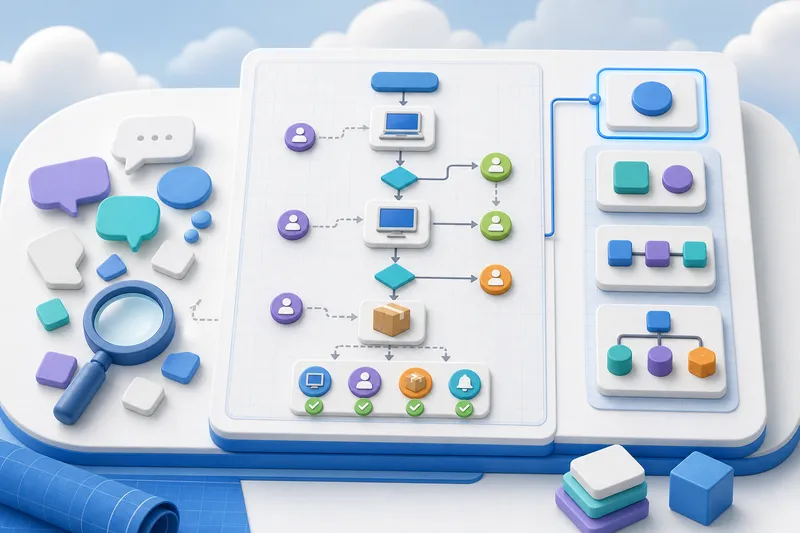
Start with Requirements & Solution Design and read through Data Import & Reconciliation: one Equipment Request from brief to tested, loaded application.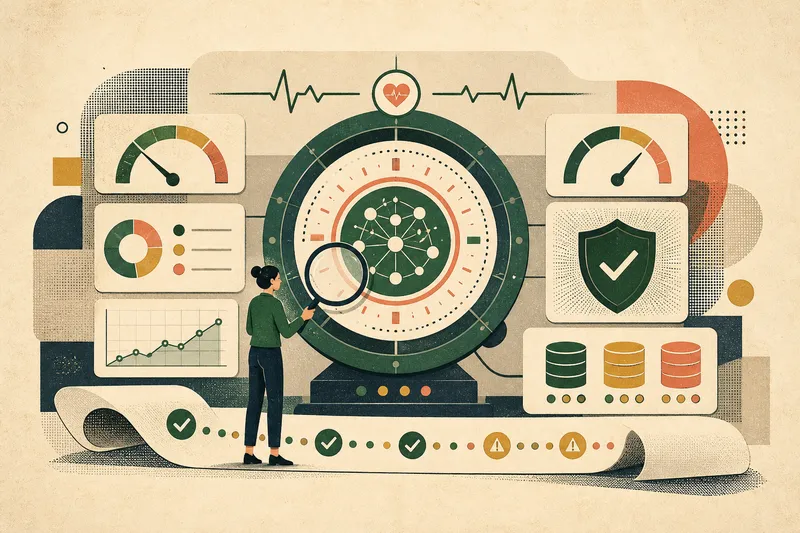
Operate a real org
Start with Org Health & Monitoring and read the whole section through Adoption, Training & Support: monitoring, UI, Flow, testing, release, approvals, and adoption.
Configure a standard product process
Build a Support Process covers statuses, queues, assignment, escalation, a test mailbox on Email-to-Case, and a backlog report, proven with four cases.
Change an app people depend on
The Salesforce Admin Capstone Project on the Equipment Request app: routing as data, a Finance escalation stage, regression, a rehearsed release, and a reviewed evidence pack.💻 Salesforce Developer Journey
Section titled “💻 Salesforce Developer Journey”The developer route runs five stages and is mapped below. It shares the first stage with the admin route and the opening Administration chapters of the second, then continues into code, the UI layer, and one connected delivery capstone.

That route is intentionally wider than a developer syllabus. Good Salesforce developers need to understand how admins operate the org, how access is designed, and why a technically valid change can still create an operational problem. It is also why the administration chapters serve both paths.
For the Developer Journey, follow these five stages in order. Each card opens the section’s first chapter; use the journey map for the required end chapter and evidence. Experienced readers can demonstrate a stage’s evidence before continuing, but safety, access testing, change testing, and recovery still need to be covered.
Understand Salesforce Fundamentals
Start with What is Salesforce? and read through Record Access, building platform, data, configuration, and access foundations.Understand the org your code will run in
Start with Org Health & Monitoring; build and test the support workspace and Case flows, then stop after Sandbox Strategy & Change Management.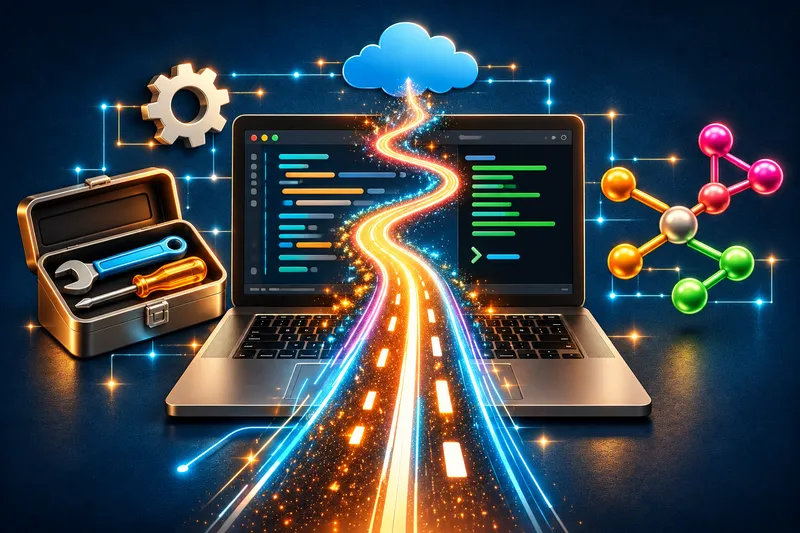
Build with Salesforce Development Fundamentals
Read from Developer Mindset & Toolkit through Testing & Deployment: Apex, queries, triggers, asynchronous work, integrations, and delivery.
Build and assess Salesforce user interfaces
Read from Evolution of Frameworks through Coexistence, Migration & Best Practices, including the Visualforce, Aura, and LWC builds.
Change the Expense Claim payment system
Deliver returned-payment reissue with access checks, bulk and persona tests, a release and recovery rehearsal, and a handover.Optional extension: AI & the Salesforce Developer explores where assistants help, where they mislead, and why design and review matter. It sits outside the five core stages.
📚 Browse the specialist collections
Section titled “📚 Browse the specialist collections”Use these when you have a defined subject rather than a whole career path to work through. Each collection has its own starting page and reading order, while cross-links bring in the wider platform context where it matters.
SOQL Essential Guide
Build reliable queries from SELECT and WHERE through relationships, aggregates, date handling, ordering, and TYPEOF.
Advanced SOQL
Work with selectivity, security context, Apex, dynamic queries, APIs, Lightning, and the limits that appear at scale.
SOSL Guide
Learn when search is the right retrieval model, then shape results safely across objects, fields, and Apex.
Salesforce Security and Access
Go past the Record Access basics into sharing at scale, restriction and scoping rules, and a repeatable way to work out why someone can or cannot see a record.
Salesforce Products
Understand what the major Salesforce products are for, where their boundaries sit, and how they connect around shared data.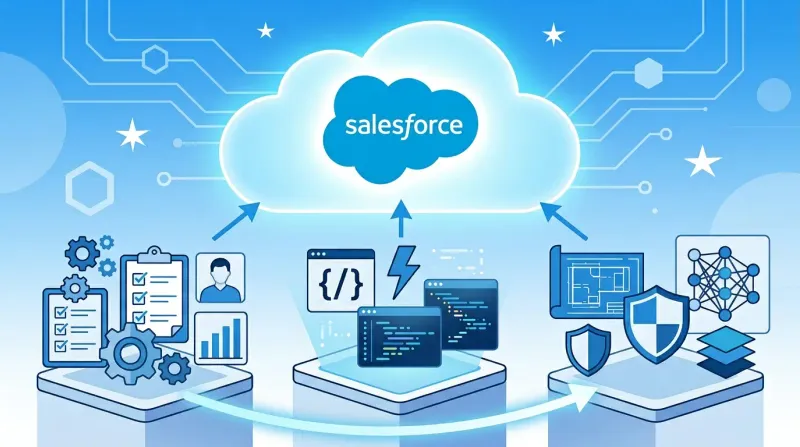
Salesforce Roles
Compare Admin, Developer, and Architect work by the outcomes each role owns, not by job title alone.🎯 Start with the decision in front of you
Section titled “🎯 Start with the decision in front of you”If you are learning Salesforce from the beginning, pick the journey that matches the role you want, the Admin Journey or the Developer Journey, and keep a practice org beside you. If you arrived with a specific problem, open the closest specialist collection and follow its cross-links only when you need more context. The aim is not to read every page. It is to understand the next decision well enough to make it safely.
Looking for a release change, migration deadline, or a production incident rather than a learning path?
Read the Salesforce articlesGo to release analysis, migration runbooks, platform changes, and lessons drawn from real production problems.